Tonkeeper wallet is a self-custody TON app for GRAM staking and payments
The short version: Self-custody TON wallet for storing, paying, swapping, and staking GRAM, with built-in dApp browsing and NFT support.
Tonkeeper wallet is a self-custody app for The Open Network that lets users hold GRAM, pay by address or QR code, swap tokens, stake GRAM, browse TON dApps, and manage NFTs from one account. It keeps private-key control with the user while giving the wallet a practical spending layer: balances, subscriptions, token exchange, collectibles, and TON services are handled inside the same interface.
GRAM staking belongs in the same place as spending
The staking angle matters because this is not only a cold balance viewer. A user who holds GRAM for network exposure also needs a daily wallet for payments, swaps, and dApp approvals. Keeping staking near the send, receive, and buy flows reduces the split between long-term holding and ordinary wallet activity. The account still acts as a self-custody TON wallet, but the interface treats earning, paying, and managing assets as connected actions.
Tonkeeper wallet presents staking as part of personal asset management rather than a separate finance product. GRAM stays tied to the user's own wallet controls, and rewards accrue through TON staking mechanics. The important habit is to leave enough unlocked GRAM for network fees and payments, because an account used for staking still needs liquid balance for transactions, swaps, and subscriptions.
How payments move through TON inside the app
TON is built for low-fee, fast transfers, and the wallet uses that character for everyday payments. A user receives assets to a TON address, sends GRAM and other supported tokens, or pays by scanning a QR code when a merchant or service supports that route. The experience resembles a payment app, except signing remains tied to the user's wallet keys.
That structure is useful for small transfers, app payments, creator tools, and Telegram-adjacent services. Tonkeeper wallet also supports subscription-style payments, so recurring wallet activity is visible in the same environment as ordinary transfers. The app does not need to turn every action into a trading screen; the payment flow is direct, readable, and centered on confirming the asset, recipient, and fee before signing.
Swaps, USDT, and token balances in one TON view
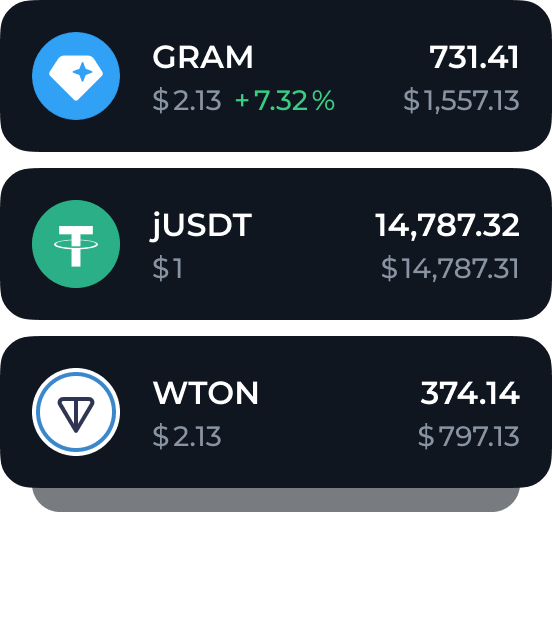
Token management is broader than GRAM alone. The official wallet positioning includes support for USDT on TON, USDT TRC20 on TRON, built-in swaps, and buying or selling tokens. That gives users a path from a stablecoin balance to GRAM for fees, from GRAM into another TON asset, or from a received token into something easier to spend.
Swaps route through decentralized exchange infrastructure, so the user should read the quoted amount, price impact, and network fee before signing. The wallet's role is to surface the transaction clearly and request approval from the account holder. Once signed, settlement happens on the connected network rather than inside a private company ledger.
NFTs, TON Domains, and dApps make the wallet personal
Beyond balances, TON accounts carry identity and collectible activity. NFTs from marketplaces such as Getgems and TON Diamonds sit naturally beside fungible tokens, while TON Domains give wallet addresses human-readable names. Those features make the account feel less like an address book entry and more like a portable profile across TON services.
In most cases, Tonkeeper wallet includes a dApp browser, which means users discover and open decentralized apps without leaving the wallet surface. That matters for NFT marketplaces, naming services, token exchanges, and community tools built for The Open Network. The same account that holds GRAM also becomes the signing identity for app interactions.
Starting from iOS, Android, browser, Telegram, or Pro
A new user chooses the form factor first. The main mobile apps serve everyday use on iOS and Android, browser extensions fit desktop dApp sessions, the Telegram option places wallet activity close to chats and TON-native communities, and Tonkeeper Pro targets users who want a more advanced management surface.
The setup flow centers on creating or importing a self-custody account, securing the recovery phrase, and funding the address with GRAM or another supported asset. After that, the first useful checks are simple:
- Confirm the receiving address before moving meaningful value.
- Keep a small GRAM balance available for transaction fees.
- Test a small send before using a new recipient or service.
- Review token approvals before connecting to unfamiliar dApps.
- Separate daily spending from larger holdings when balances grow.
Signer and self-custody controls define the security model
The security model starts with non-custodial key control. The wallet gives the user direct authority over signing, recovery, and transaction approval. Tonkeeper Signer exists for users who want stronger separation between everyday interface activity and signing operations, especially when larger balances or more frequent dApp use make a single hot wallet feel too exposed.
For context, Tonkeeper wallet is best understood as a self-managed account tool: it displays assets and prepares transactions, while the user's key material authorizes movement. Losing the recovery phrase means losing the practical path back into the account, so storage discipline is part of using the product rather than an optional extra.
Where Tonkeeper Pro fits for heavier wallet activity
On a practical level, Tonkeeper Pro serves users who manage more than casual transfers. A desktop-oriented or advanced wallet surface gives more room for reviewing assets, handling repeated transactions, and watching account activity. That difference matters when the account is used for staking, NFT collecting, stablecoin transfers, and dApp approvals in the same week.
That said, Tonkeeper wallet still covers the core mobile use case, but Pro gives active TON users a more deliberate workspace. Someone who signs many transactions gains from a larger screen, clearer account review, and a setup that pairs well with stricter signing habits.
When another TON wallet fits the job
The TON ecosystem includes other wallet choices, and the right pick depends on the user's main workflow. MyTonWallet is known for broad TON account management across devices, OpenMask appeals to users who prefer a browser-extension style closer to Ethereum wallet habits, and Telegram's native wallet experience suits people who want chat-based transfers and simple access inside the messaging app.
More broadly, Tonkeeper wallet stands out when the priority is a dedicated self-custody TON app with GRAM staking, QR payments, swaps, NFTs, TON Domains, and a dApp browser in one interface. Users who want institutional custody, multi-person treasury controls, or exchange-style order books will look beyond a personal wallet and choose tools built for those narrower jobs.
The strongest use case is a daily TON account
This wallet makes the most sense for someone who actually uses The Open Network rather than only watching a token price. It handles the practical loop: receive GRAM, keep USDT available, pay a service, stake idle GRAM, open a marketplace, review an NFT, and sign into a dApp. Those actions belong close together because each one depends on the same account identity and the same chain fees.
Day to day, Tonkeeper wallet gives that daily account a clean shape. It is familiar enough for normal payments, specific enough for TON-native services, and flexible enough to grow from a simple mobile wallet into a more active setup with Pro, browser access, and Signer.
Things people ask about Tonkeeper wallet
Does Tonkeeper wallet work with NFTs and TON Domains?
Yes. Tonkeeper wallet supports TON NFTs and works with ecosystem services such as Getgems, TON Diamonds, and TON Domains. NFTs appear as wallet assets, while a TON Domain gives a human-readable name to an address. These features use the same self-custody account that holds GRAM and other supported tokens.
Recovering access if I lose my phone with Tonkeeper wallet installed?
Access is restored by importing the wallet recovery phrase into a compatible Tonkeeper app or another compatible TON wallet. The phone itself is replaceable; the recovery phrase is the real account backup. If the phrase is lost too, the wallet balance cannot be recovered through a support request because the account is self-custodied.
Which version should I choose for staking: mobile app, browser extension, or Tonkeeper Pro?
The mobile app is enough for creating a wallet, holding GRAM, and starting staking. The browser extension is better for desktop dApp sessions, while Tonkeeper Pro suits heavier account management and more frequent review. The staking function belongs to the same account model, so the best version is the one that matches how you sign and monitor transactions.
What fees should I expect when staking GRAM from Tonkeeper wallet?
Staking from Tonkeeper wallet involves TON network transaction fees plus the economics of the staking option shown in the app. The chain fee is paid in GRAM and is normally small, but the exact cost appears before signing. The staking return, validator terms, and any lock or unstake timing should be read in the staking screen before committing funds.