Tonkeeper is a self-custody TON wallet for GRAM payments
The short version: Self-custody TON wallet for storing, sending, and swapping GRAM, with built-in staking, NFT support, and a dApps browser.
Tonkeeper is a non-custodial wallet for The Open Network that holds GRAM, USDT on TON, USDT TRC20, NFTs, staking positions, swaps, and dApp connections inside one user-controlled interface. It is built for everyday TON activity: receiving assets, paying by QR code, exchanging tokens through decentralized liquidity, browsing TON apps, and managing wallet access across iOS, Android, Telegram, browser extensions, and a Pro desktop-style experience.
GRAM storage with user-held keys
The core idea is simple: the wallet creates and manages addresses for TON assets while the owner keeps control of the keys. That self-custody model matters because every transfer, swap, NFT action, and staking move begins from the wallet holder rather than an account operator. Tonkeeper presents balances, transaction history, collectibles, and connected apps in a consumer-friendly interface, but the chain records the final state on TON.
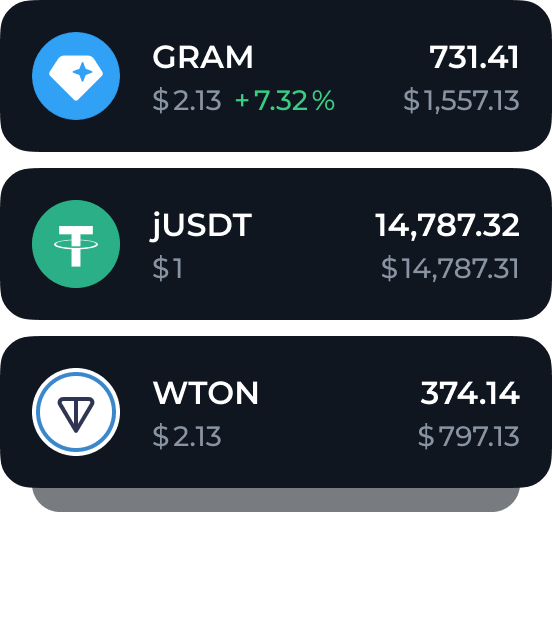
GRAM, described by the official wallet as the current name for what was previously Toncoin, is the primary asset for network fees and payments. USDT on TON and USDT TRC20 broaden the payment side for users who prefer dollar-denominated tokens. The wallet also supports tokens issued in the TON ecosystem, so the same address experience handles routine transfers and newer app-specific assets.
How receiving and paying works on TON
A user receives funds by sharing a wallet address, a TON domain, or a scannable code. Once the transfer is broadcast and confirmed by the network, the balance appears in the app with the relevant token and transaction record. Low fees and fast finality are part of TON's design, so small payments and app interactions feel closer to messaging than to slow settlement rails.
Payments work from the same interface. A sender selects an asset, enters or scans the recipient details, reviews the amount and fee, and signs. Tonkeeper also supports paying for goods and services inside wallet-connected flows, including QR payments where the receiving address and amount arrive prefilled. That makes it practical for simple person-to-person transfers as well as checkout-style use inside TON apps.
Swaps route tokens through decentralized exchangers
The built-in swap function gives users a direct path between supported tokens without leaving the wallet. Behind the interface, swaps rely on decentralized exchangers and liquidity venues in the TON ecosystem, including names a TON user will recognize such as STON.fi. The wallet shows the selected pair, expected output, and transaction details before the user signs.
Slippage, liquidity depth, and network fees shape the final trade. A swap is still an on-chain transaction, so the signed action becomes irreversible once confirmed. That is the one place where caution belongs: review the token, amount, and receiving side before approving a swap or dApp request.
Staking turns idle GRAM into network participation
Staking in Tonkeeper gives GRAM holders a way to participate in TON's proof-of-stake economy from the wallet interface. The user chooses a staking option, commits assets through the supported flow, and tracks the position alongside ordinary balances. Rewards accrue through the staking mechanism rather than from a separate trading strategy, so the action fits users who want exposure to network participation without running validator infrastructure.
Unstaking terms matter because staked assets follow the rules of the selected staking route. The wallet interface helps expose the position and expected actions, while the underlying staking contract governs timing and withdrawal behavior. A user who expects to spend GRAM immediately keeps enough unstaked balance for fees, payments, and swaps.
NFTs, TON Domains, and named wallet identities
NFT support is not an afterthought on TON. The ecosystem includes marketplaces and identity tools that turn wallet ownership into a visible profile, collection manager, and address book. Getgems focuses on NFT collections, TON Diamonds serves digital art and curated collections, and TON Domains gives users human-readable names that point to wallet addresses.
Those pieces reduce friction in daily use. Sending to a readable name is easier than checking a long string, and viewing a collectible inside the wallet gives immediate proof of ownership. Tonkeeper brings these assets into the same place as GRAM, stablecoins, and token balances, which keeps the experience coherent for users who move between payments and collectibles.
The dApps browser connects the wallet to TON apps
The in-wallet dApps browser is the bridge between stored assets and the broader TON application layer. A user opens a decentralized app, connects the wallet, reviews the requested action, and signs only the transaction they accept. That flow covers exchanges, NFT markets, domain services, games, and other TON-native tools.
Because dApps ask for permissions and signatures, the wallet's review screen becomes the control point. It shows what is being requested before funds move or contracts execute. Tonkeeper supports this app-driven workflow across mobile and browser environments, which suits users who jump between Telegram-based discovery, mobile payments, and desktop research.
Getting set up on iOS, Android, Telegram, or an extension
Setup begins by installing the app or opening one of the supported access points, then creating or importing a wallet. A new wallet generates recovery credentials that must be stored offline and kept private. An imported wallet uses existing recovery material, which brings the same address and balances into the chosen device.
The available surfaces serve different habits:
- iOS and Android handle daily payments, QR scanning, NFTs, and staking from a phone.
- Telegram access fits users who discover TON apps and payments inside chats.
- Browser extensions make desktop dApp approvals faster for web-based workflows.
- Tonkeeper Pro gives heavier users a fuller workspace for portfolio and transaction management.
- Signer separates approval from the regular wallet flow for users who want a stricter signing setup.
Security rests on custody, device hygiene, and signing discipline
Self-custody gives the owner direct control, and that control comes with responsibility. Recovery words, device passcodes, biometric locks, and transaction review habits decide how resilient the wallet is in ordinary use. The app does not need a conventional account with personal profile disclosure for basic wallet activity, which supports privacy for people who want to hold and move crypto without creating another custodial login.
Tonkeeper also publishes support, documentation, GitHub resources, and bug bounty channels, which are important signals for a wallet handling real assets. Still, the most important security behavior happens at the moment of signing. A user should understand whether they are sending tokens, approving a swap, staking GRAM, connecting a dApp, or accepting an NFT-related action before confirming.
Where it fits beside other TON wallet choices
The TON ecosystem includes several wallet routes, including built-in Telegram wallet experiences, hardware-style signing setups, and general multi-chain wallets that add TON support beside Bitcoin, Ethereum, Solana, and other networks. Tonkeeper is strongest when the user's activity is mainly TON-native: GRAM payments, TON NFTs, TON Domains, staking, swaps, and dApps that expect a familiar TON wallet connection.
A multi-chain wallet is better for someone whose primary portfolio lives across many unrelated networks. A Telegram-first wallet is convenient for chat-based transfers. This wallet fits the user who wants self-custody with a focused TON interface, broad platform availability, and direct access to the applications that define The Open Network.
Things people ask about Tonkeeper
What fees do users pay when sending GRAM from this wallet?
Users pay the TON network fee required to process the transaction, and the amount appears before signing. The exact fee changes with the type of action: a simple GRAM transfer is different from a swap, staking action, NFT purchase, or smart contract interaction. The wallet itself presents the fee review step so the user sees the cost before approving the transaction.
Can I hold USDT in the same wallet as GRAM?
Yes. The wallet supports USDT on TON and USDT TRC20 alongside GRAM and other supported tokens. That makes it useful for people who want a dollar-denominated token balance without separating it from their TON activity. The important detail is network selection: sending a token on the wrong network can create recovery problems, so the token standard should match the receiving destination.
Does the wallet require personal identity verification to create an address?
Creating a self-custody wallet does not require the same account signup flow used by custodial exchanges. A user generates or imports wallet credentials and controls the address directly. Buying or selling crypto through integrated services can involve additional provider requirements, because those payment routes are separate from simply creating an address, receiving assets, or signing transactions on TON.
Recovering access after losing a phone, what matters most?
Recovery depends on the wallet's recovery credentials, not the lost device itself. A user who saved the recovery phrase or approved backup method can restore access on another supported device and regain control of the same address. Without valid recovery material, the assets remain on-chain but the owner lacks the signing key needed to move them.
Which dApps work best with a TON-focused wallet?
TON-native dApps work best: decentralized exchangers, NFT marketplaces, TON Domains, collection platforms, payment tools, and apps built around Telegram-style user flows. These services expect TON addresses and TON transaction signing. A general Ethereum dApp, for example, follows a different account and contract environment, so compatibility depends on whether the app specifically supports The Open Network.
Is Tonkeeper Pro different from the mobile wallet?
Tonkeeper Pro is aimed at users who want a broader workspace than a phone screen provides. The mobile apps are suited to QR payments, everyday transfers, staking checks, and quick dApp approvals. The Pro experience is better for reviewing activity, managing multiple actions with more screen space, and handling a heavier TON workflow while keeping the same self-custody principle.